

Advantages of the Mini-Pin Motor
Lower twisting height and a more compact product size
Uses less copper than Hair-Pin designs, reducing production costs while delivering higher performance
Provides larger electrical clearance and creepage distance compared with X-Pin, making it more suitable for high-voltage platforms
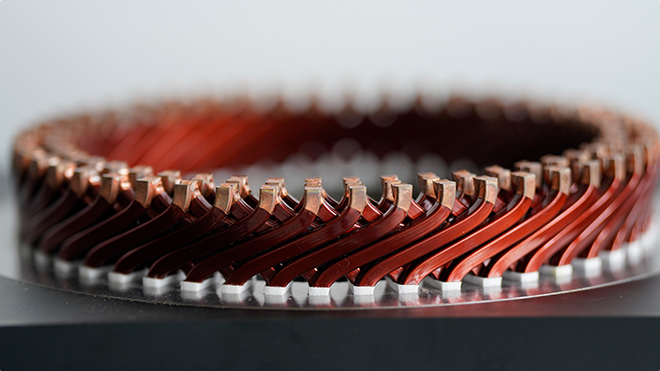
Challenges of the Mini-Pin Motor
High equipment precision requirements
The Mini-Pin process demands significantly higher equipment precision than the traditional Hair-Pin process
High welding difficulty
End-winding welding of Mini-Pin must achieve high precision within a very limited space. Advanced technologies such as laser deep-penetration welding are required, along with strict control of welding parameters
Advantages of NEVEM
Approaches to Realizing Mini-Pin
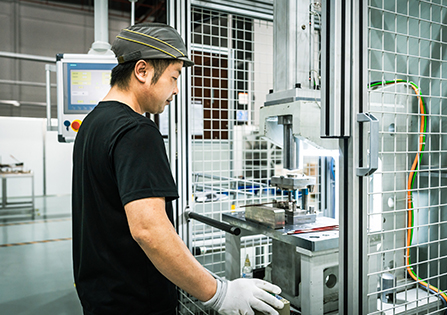
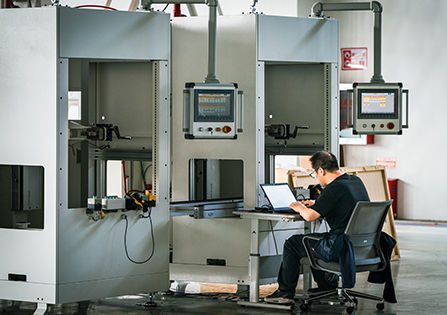
Process First
Validate the key and challenging Mini-Pin processes in advance to define precision targets
Optimize production line equipment design
Improve Mini-Pin production line equipment precision through design optimization
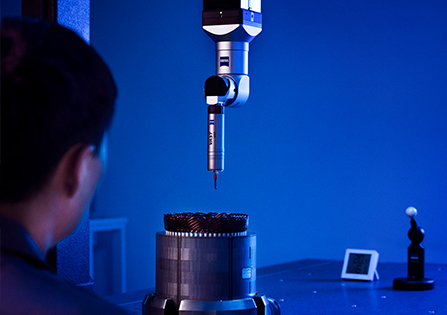
Full-process precision inspection and control
Conduct precision inspection throughout the entire process—from incoming materials, equipment assembly, equipment commissioning, to stator product output—to ensure precision standards are met.


