

ICSM 2026 · 10th International Conference on Sustainable Manufacturing“In 2020, hairpin accounted for under 10% of drive motors in China's EVs. Five years later it is 85%. The next shift is already moving faster.”
At ICSM 2026, co-hosted by Tongji University's School of Automotive and Energy Engineering, School of Mechanical Engineering and Robotics, and KIT wbk, NEVEM CTO Xianfeng Wang joined industry experts to discuss where flat-wire manufacturing goes next.
The next shift is already here
Axial-flux motors entered series production this year. Humanoid robots are forecast to reach 500,000 units a year by 2030. eVTOL, electric ships and industrial drives all want the same thing: more power from less copper, in less space.
What customers buy is changing too. They used to ask whether a stator could be built at all. Now they ask how fast the line changes over, how many come out right the first time, and whether unit cost can be counted. Cycle time, yield and changeover decide who wins the order. Data and software decide who makes money on it.
The physics is solved. The bottleneck sits between a prototype that passes once and 30,000 stators a year that all pass.
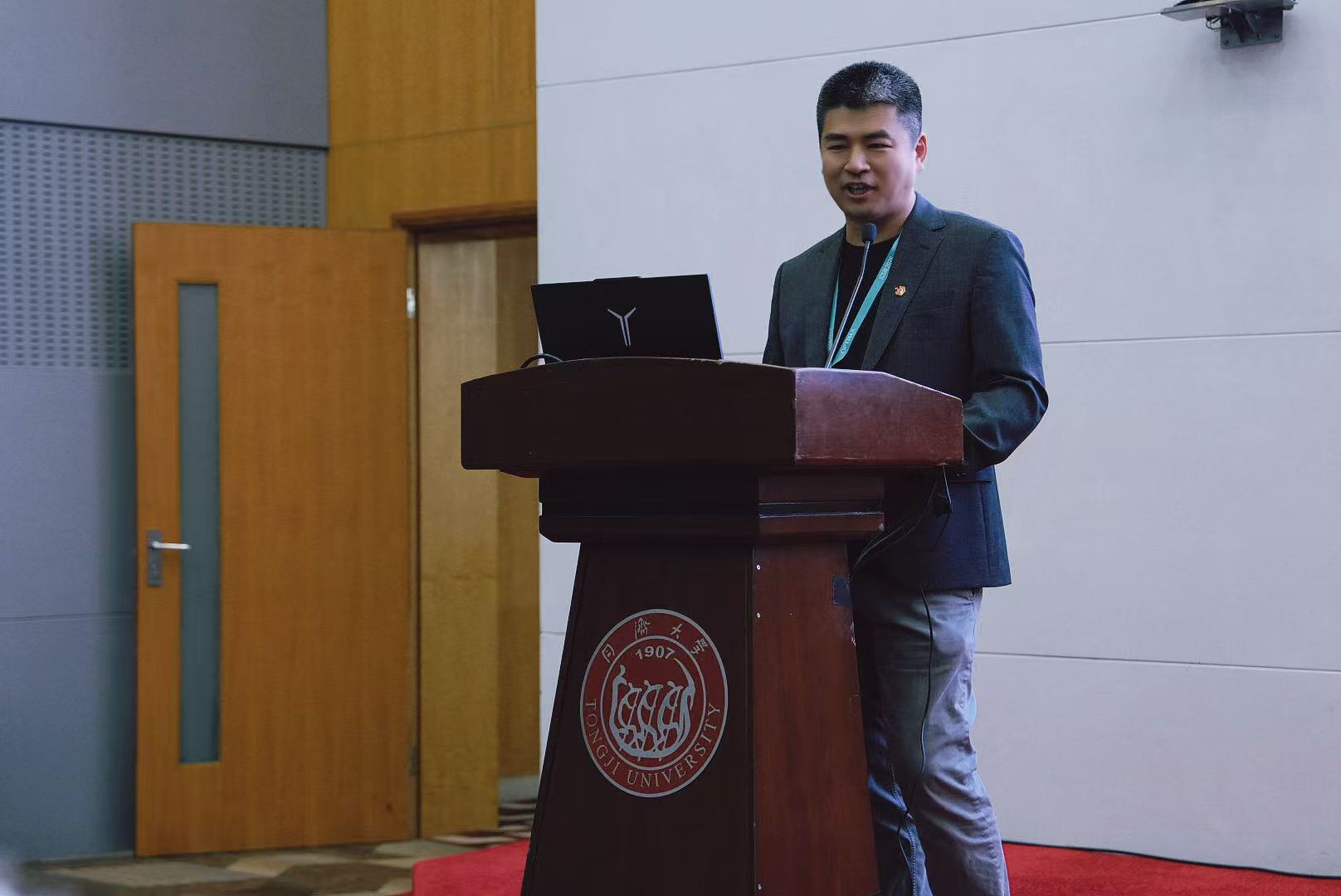
A conversation at ICSM 2026
This was the conversation at ICSM 2026 between NEVEM CTO Xianfeng Wang and Prof. Jürgen Fleischer of KIT's wbk.
He works on automating processes that aren't mature yet, we build the lines that take them to volume.
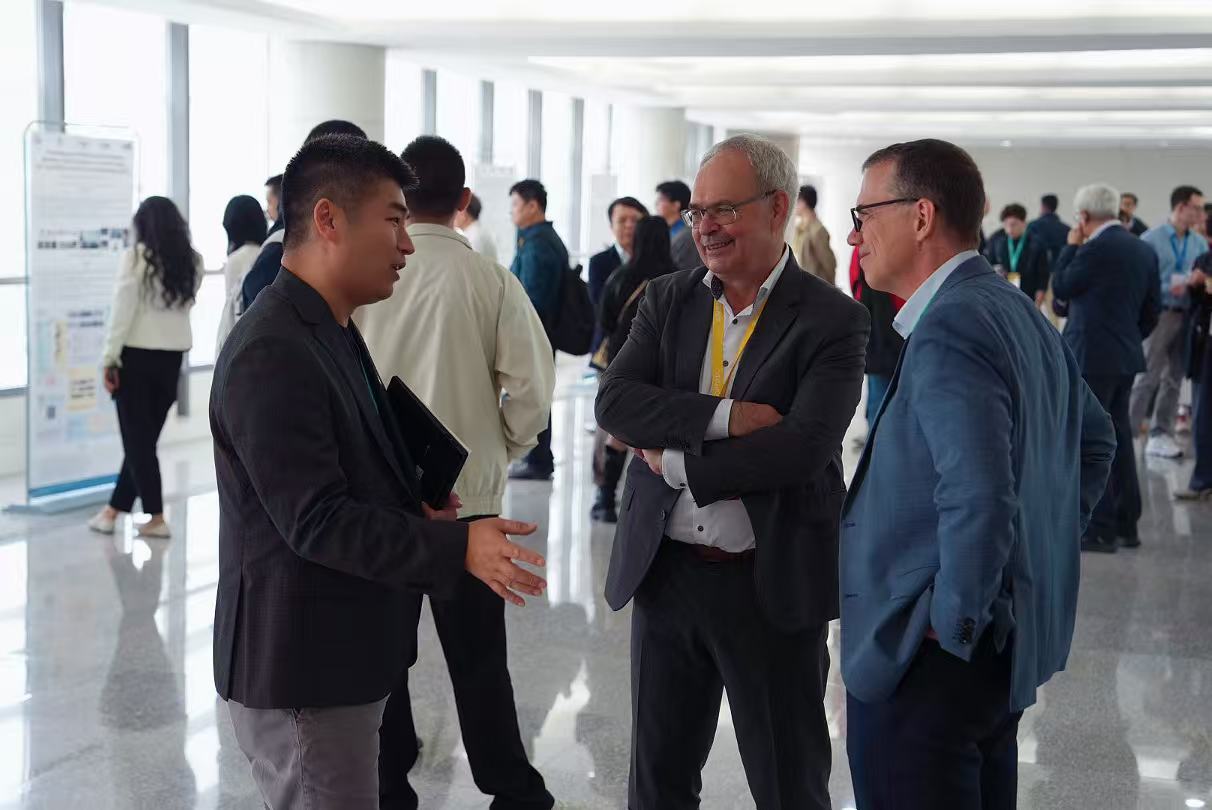
Four points we agreed on
1)Axial flux is not a scaled-up hairpin lineNew tooling for every diameter, and Mercedes cites 98 process steps for its motor. Whoever industrializes it first sets the standard. We delivered China's first axial-flux mass-production line in 2025.
2)Design is rarely the bottleneck. Ramp-up yield is.That's why we simulate layouts before steel is cut, commission digitally, and trace every step.
3)AI pays off where it is narrowOn the line we use it for weld inspection, toolpath correction and first-article checks. It runs the other way too: the hairpin motors our lines produce will end up inside physical AI. Humanoid robots alone need 14 million joint motors a year, and data centres already draw 415 TWh, about a third of it on cooling, where the fans and compressors need motors as well.
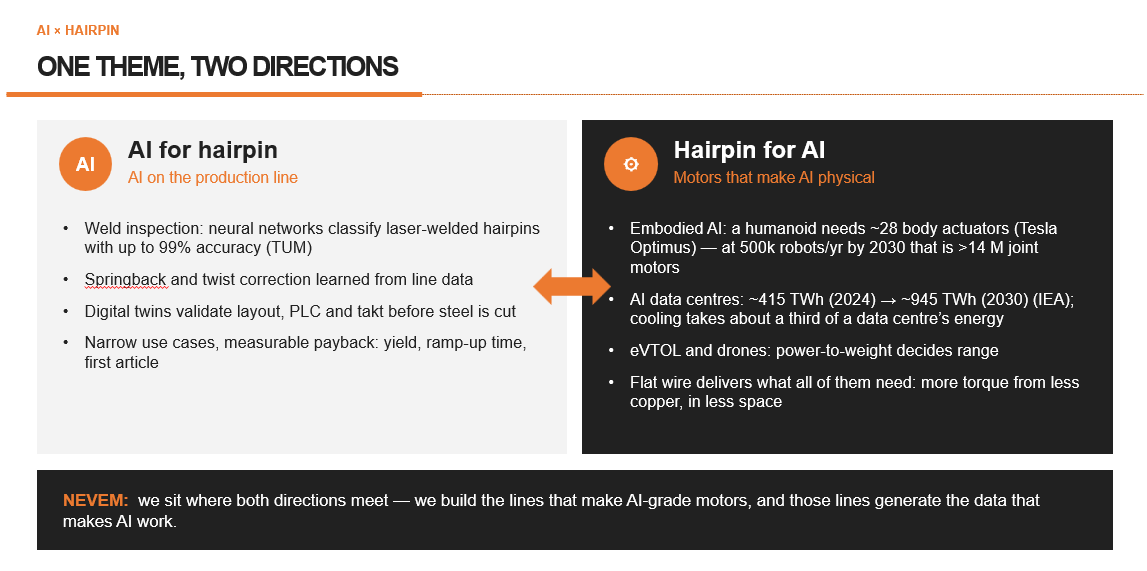
4)Working on one line beats working in sequenceResearch and machine builders that work side by side close the gap faster than those that hand off.
From lab to line
Prof. Fleischer has been a visiting professor at Tongji University since 2012. We also run a joint project with Tongji: a digital twin of the hairpin stator line, 15–21% more simulated output in a published study.
LAB → LINE01ResearchUniversities
02Pilot lineInstitutes
03Small batchOEMs
04VolumeCustomer plantsAll four stages share one process. What scales is automation and cycle time, not the process itself.
NEVEM is present at every stage: we join research early to shape manufacturability, supply near-production equipment for pilot lines, run samples with OEMs, and scale to 30,000 units in customer plants. The process does not change. Automation does.
ABOUT FUTUREFlexibility will be copied.
Only continuous innovation keeps the lead.
NEVEM builds on innovation and deep process work. We serve OEMs and research institutes worldwide, from first sample through pilot line to series production.
Building a stator programme for EVs, humanoid robots or low-altitude aviation? Tell us the application and the volume target, and our team will come back with a process route and a line concept.
Planning a stator programme?Send us the application and the volume target. We will reply with a process route.Get in touch
END


